

APPLICATIONS
IND-Enabling Studies
IND-enabling off-target characterization for gene-edited therapeutics
As gene-edited therapeutics progress toward pre-IND and IND, off-target assessment becomes a critical development decision.
Regulatory guidance, including from the FDA, increasingly expects unbiased, genome-wide assessment in relevant human cell types. Development teams must clearly distinguish treatment-induced DNA breaks, prioritise sites for orthogonal confirmation, and generate datasets that support regulatory review.
INDUCE-seq® supports IND-enabling and is designed for the stage where teams are advancing a final candidate and require a defensible view of editing specificity in relevant cell systems.
It serves as the cell-based, genome-wide component of an IND-enabling strategy, identifying treatment-associated break sites, informing site selection for orthogonal confirmation, and supporting the broader regulatory narrative around editing specificity.
How we support regulatory guidance
Standardized, reproducible outputs to support IND submissions

Generation of genome-wide, cell-based datasets aligned with regulatory expectations
Consistent, reproducible data across experiments and replicates
Defensible, evidence-based narrative on editing specificity
Identification of treatment-induced off-target sites for confirmation strategies.
Regulatory documentation and FDA Master File reference
IND-enabling use cases:

Final guide & nuclease selection

Focused preclinical off-target studies

Off-target nomination for confirmation

Comparative specificity & safety assessment

Support for pre-IND & IND packages
In-house deployment
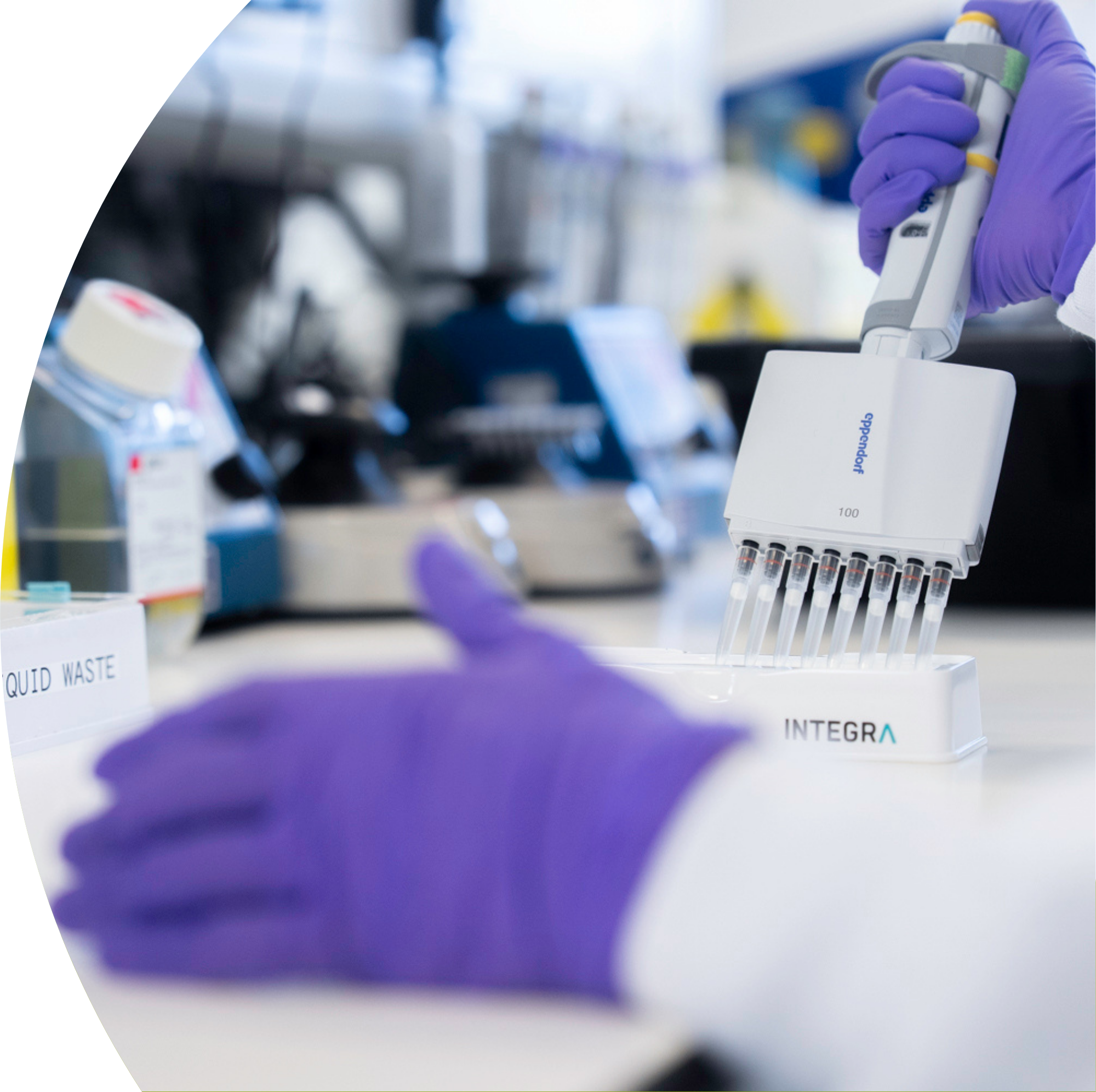
The BreakMap IND-enabling platform is an end-to-end, kitted workflow that enables IND-critical off-target characterisation to be performed in-house, from assay through analysis, keeping samples, data and timelines under internal control.
This approach reduces reliance on outsourced services and fragmented workflows, enabling faster iteration and greater flexibility as programs evolve. By keeping off-target characterization in-house, teams can generate, review and act on data in real time, supporting more efficient decision-making and tighter alignment with development timelines.
Supporting IND-enabling focused studies

Genome-wide, unbiased detection
Provides an unbiased, genome-wide readout of potential off-target events, free from PCR and other technical biases.

Characterize activity in relevant cells
Profile off-target activity directly in edited cells, including primary cells, iPSCs, HSPCs, T cells and other disease-relevant models.

Prioritize sites for confirmation
Generate ranked, annotated off-target lists using frequency, homology and treated vs control comparisons, reducing false positives.

IND-ready
outputs
Deliver standardized outputs: genome-wide break-site identification, replicate metrics, annotated nomination tables and reproducible scoring.

Planning an IND-enabling gene-editing program?
Talk to Broken String about building the genome-wide, cell-based dataset behind your confirmation strategy and regulatory package.